
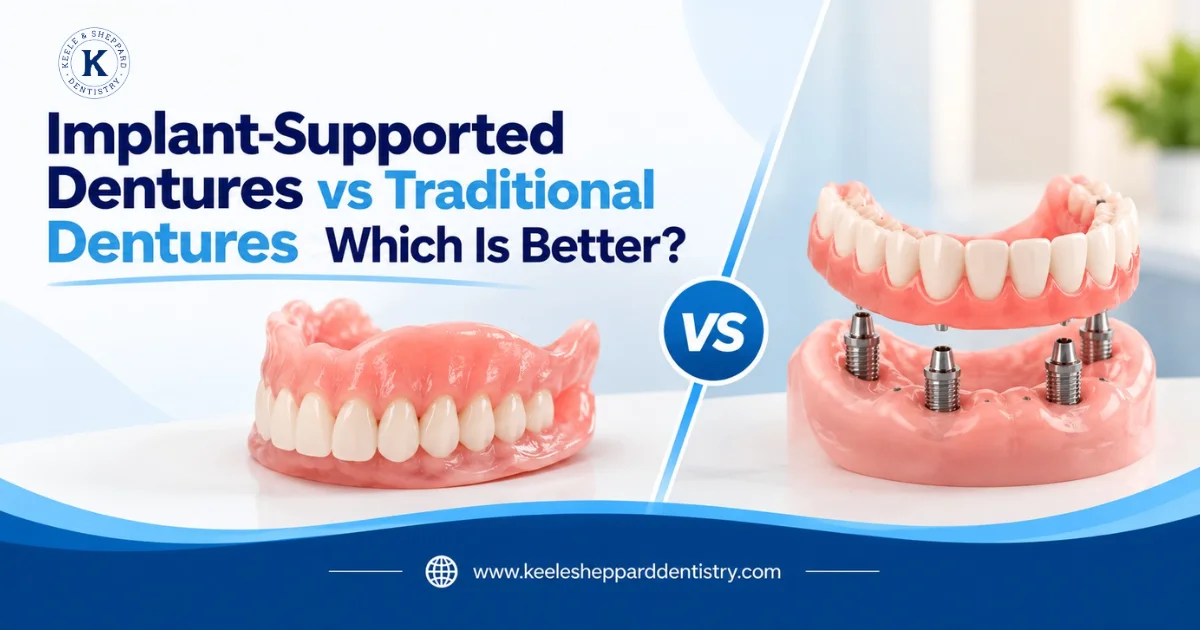
| The Short Answer: In dentures vs implant-supported dentures, implant-supported (or implant-retained dentures) clip onto a few implants for a stable, firm fit, while traditional dentures rest on the gums and can move. Implant-supported options protect bone and improve chewing; traditional dentures cost less and need no surgery. The right fit depends on your bone, budget, and goals. |
If your denture slips, clicks, or has you reaching for adhesive, you’ve probably wondered whether implants could help. This guide compares dentures vs implant-supported dentures plainly, so you can see where each wins and choose with a dentist in North York.
This article is for general information and is not a substitute for a dental exam.
What Each Option Is
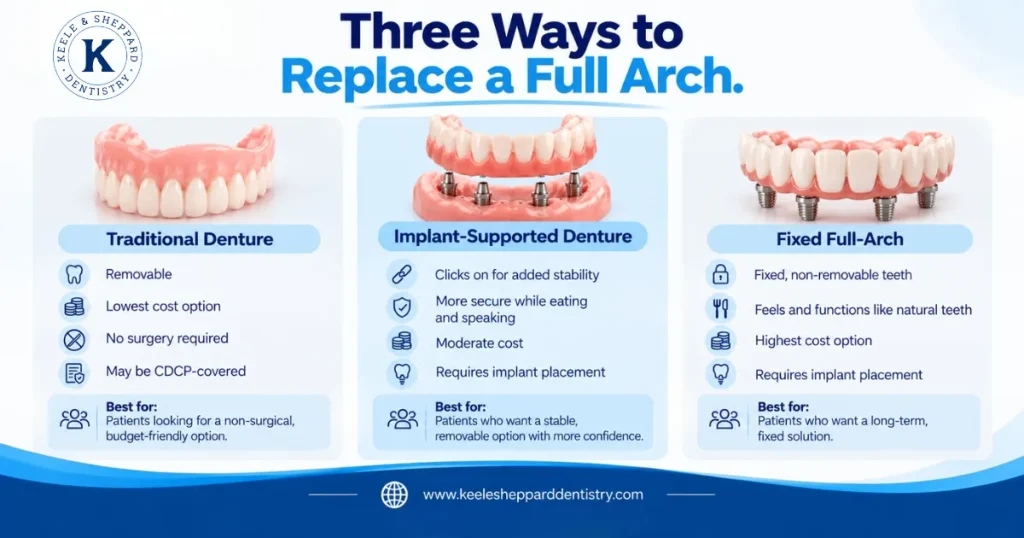
Traditional dentures are custom removable teeth that rest on the gums, held by suction, natural ridges, and sometimes adhesive. Complete dentures replace a full arch; partials fill gaps around remaining teeth. Modern dentures look natural and restore a full smile without surgery.
Implant-retained dentures (also called implant-supported dentures) use a small number of implants, often two to four per arch, as anchors. The denture clicks firmly onto the implants, so it holds in place during eating and speaking but can still be removed for cleaning. It’s the middle ground between a removable denture and a fixed full-arch bridge.
The Side-By-Side Comparison
| Factor | Implant-Supported Dentures | Traditional Dentures |
|---|---|---|
| Stability | Clip firmly onto implants, little movement | Rest on gums, can shift with wear |
| Bone Health | Implants stimulate and help preserve jawbone | Bone slowly shrinks beneath over time |
| Chewing Power | Stronger, closer to natural teeth | Limited with hard or sticky foods |
| Upfront Cost | Higher, due to implants | Lower, most economical route |
| Surgery | Yes, implant placement needed | No surgery required |
| Daily Care | Remove to clean, care for implants too | Remove and clean daily |
| CDCP Coverage | Varies; implants often not covered | Dentures may be covered for eligible patients |
Where Implant-Supported Dentures Win

The benefits of implant-supported dentures come down to stability and health. Because the denture anchors to implants, it doesn’t rock or slip, which makes eating and speaking easier and ends the adhesive routine for most people. The implants also stimulate the jawbone the way natural tooth roots did, slowing the bone loss that leaves long-term denture wearers with a shrinking jaw and a looser fit over the years.
For many patients, that combination, a firm bite and better bone preservation, is worth the higher upfront cost. The full treatment journey is covered in our guide to dental implants in North York.
Where Traditional Dentures Win
Traditional dentures still have real strengths. They cost far less upfront, need no surgery, and suit patients whose health or bone makes implant treatment unwise. They’re also faster to complete, often within weeks. And for eligible patients, the CDCP may help cover dentures, while it generally does not cover implants. For someone balancing a fixed budget with the need to eat and smile well, a well-made traditional denture is a sound, dignified choice, not a consolation prize.
How to Choose
Four questions settle most decisions: How stable does your denture need to feel day to day? How much does long-term bone health matter to you? What’s your budget, upfront and over ten years? And what does your coverage contribute to each path? A 3D scan and a frank conversation turn those questions into a clear recommendation.
Implant-Supported Dentures in North York at Keele & Sheppard Dentistry
At Keele & Sheppard Dentistry, we make both. Our six dentists, led by Dr. Neerav J. Arora, DDS, assess your bone and gums with 3D imaging at our Keele Street practice near Yorkdale Mall and Highway 401, then lay out traditional and implant-supported options side by side with written estimates for each. You get direct insurance billing, Beautifi payment plans, CDCP eligibility checks, and evening and Saturday appointments, from a team rated 4.9 stars from 1,700+ Google reviews. We’ll recommend the dental implant dentist in North York route only when it genuinely serves you better than a traditional denture.
Book Your Denture Consultation
Whether you want a fresh traditional denture or a stable implant-retained one, a consultation lays out both with real numbers. Not sure which fits? Book and we’ll check your bone and options.
Keele & Sheppard Dentistry · 3-2800 Keele Street, North York, ON M3M 0B8 · Call 416-398-7460 · Book your consultation. Monday to Friday 9 AM to 7 PM, Saturday 9 AM to 3 PM.
FAQs about Dentures vs Implant-Supported Dentures
Q1. What is the difference between dentures and implant-supported dentures?
Traditional dentures rest on the gums and can move during eating or speaking. Implant-supported dentures, also called implant-retained dentures, clip onto a few implants so they hold firmly in place, while still removing for cleaning. The implant option improves stability and helps preserve jawbone.
Q2. Are implant-supported dentures worth it?
For many people, yes: they offer a firmer bite, less movement, no adhesive, and better bone preservation than traditional dentures. They do cost more upfront and require minor surgery. Whether the benefits justify the cost depends on your priorities, bone, and budget, which a consultation helps you weigh.
Q3. How many implants are needed for implant-supported dentures?
Commonly two to four implants per arch, depending on the jaw, the denture design, and whether it is upper or lower. Lower dentures often need fewer. A 3D scan at your consultation shows how much bone you have and how many implants your plan requires.
Q4. Do implant-supported dentures stop bone loss?
They help. Implants stimulate the jawbone the way natural tooth roots did, which slows the bone shrinkage that follows tooth loss and affects long-term denture wearers. Traditional dentures cannot do this, which is one reason their fit can loosen over the years as bone changes.
Q5. Does the CDCP cover implant-supported dentures?
Coverage varies. The CDCP may help cover traditional dentures for eligible patients, while it generally does not cover the implant portion of treatment. We check your eligibility and explain what applies to each option before any treatment, so there are no surprises on cost.
Q6. Can I convert my existing denture to an implant-supported one?
Often, yes. In many cases an existing denture can be adapted, or a new one made, to click onto newly placed implants. Suitability depends on the denture’s condition and your bone. A consultation confirms whether converting your current denture is the right path for you.
