
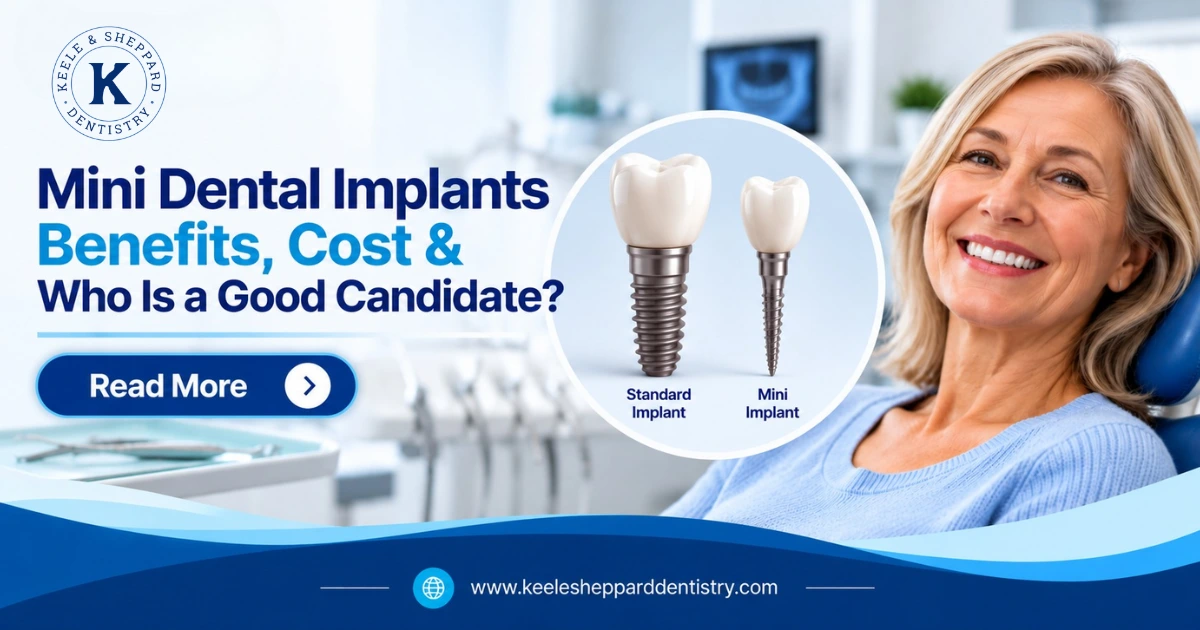
| The Short Answer: Mini dental implants are narrower titanium posts used mainly to stabilise dentures or replace small teeth. They often need less surgery, less bone, and a lower cost than standard implants, and many are placed in a single visit. Suitability is confirmed at a North York consultation with a 3D scan. |
If standard implants felt out of reach because of cost, bone, or the thought of surgery, there’s a smaller option worth understanding. Mini dental implants solve a specific set of problems well, especially loose lower dentures. This guide explains what they are, their benefits, what they cost, and who makes a good candidate.
This article is for general information and is not a substitute for a dental exam.
What Are Mini Dental Implants?
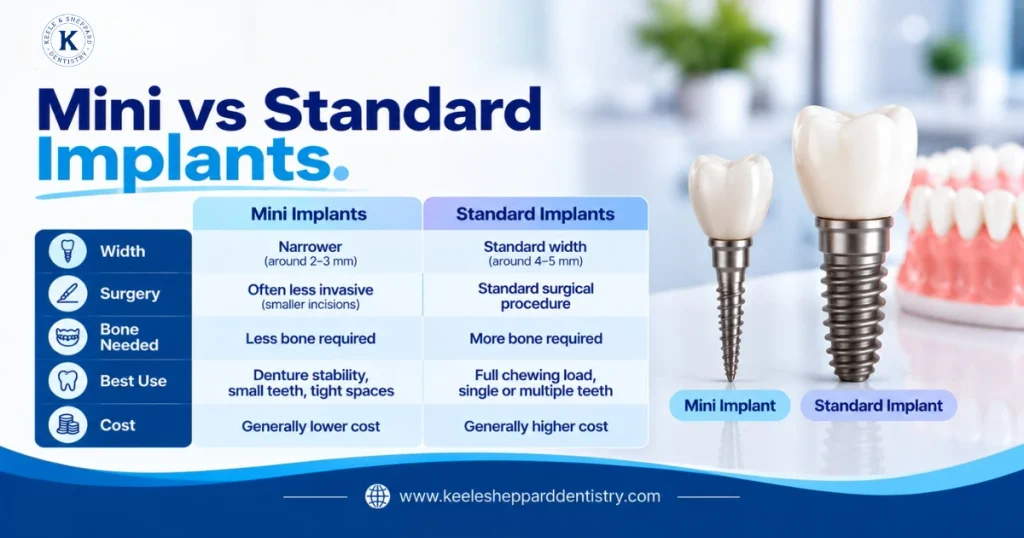
A mini dental implant is a slimmer version of a standard implant, usually less than 3 millimetres wide, compared with the thicker posts used in conventional treatment. Like all implants, it’s a titanium post that acts as an artificial tooth root, but its narrow build suits lighter jobs and tighter spaces.
The most common use for mini dental implant treatment is anchoring a lower denture. A few minis placed in the jaw let a denture click firmly into place, ending the slipping and most adhesive. Because the posts are narrow, placement is often quicker and gentler than standard implants, and many patients can use them sooner.
Mini Dental Implants Benefits
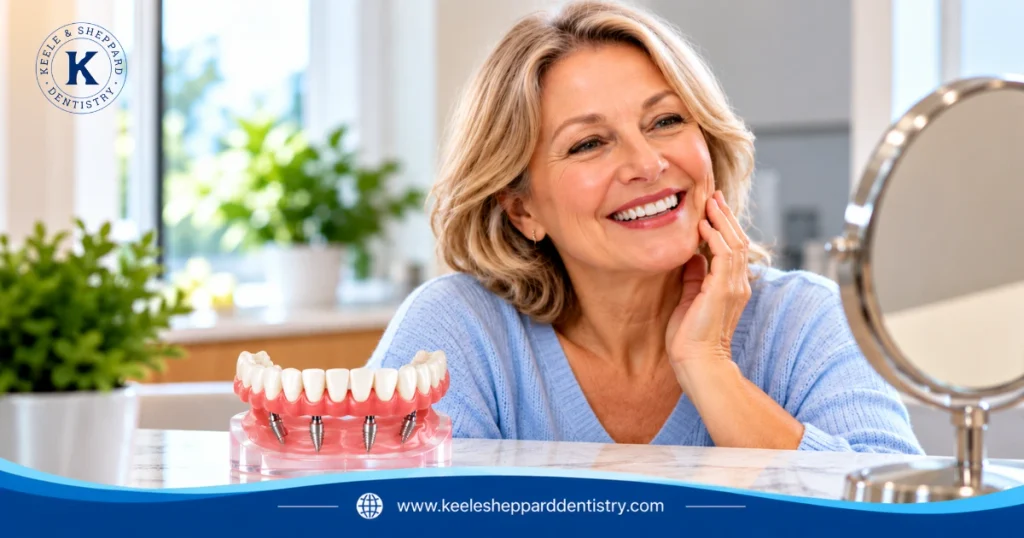
The dental implant benefits that minis deliver especially well:
- Less Surgery, since the narrow posts are placed through a smaller opening in many cases.
- Less Bone Needed, which opens the door for patients with thinner jawbone.
- Lower Cost than standard implants, both per post and overall.
- Faster Use, as some minis can carry a denture sooner than standard implants.
- A Stable Denture, replacing the daily frustration of movement and adhesive with a confident click-in fit.
They aren’t a universal replacement for standard implants. Their slim build suits denture stabilisation and small teeth more than the heavy chewing load of a back molar, which is where standard implants stay the stronger choice.
Who Is a Good Candidate for Mini Dental Implants?
Minis tend to suit people who:
- Wear a Loose Lower Denture and want it stabilised without major surgery.
- Have Limited Jawbone that may not support standard implants without grafting.
- Prefer a Gentler Procedure or have health factors that favour less invasive treatment.
- Want a Lower-Cost Route into implant stability.
Good gum health still matters, and heavy grinding or clenching can be hard on narrow posts. A consultation with a 3D scan is the only way to confirm whether mini dental implants for missing teeth or denture stability are right for you.
What Mini Dental Implants Cost
Mini implants generally cost less than standard implants, both per post and for a full denture-stabilising set, partly because the procedure is often simpler and grafting is less likely. The final figure depends on how many posts you need, the denture work involved, and your individual jaw. These are general ranges, not quotes, and your exact cost is confirmed at a consultation. We bill most insurance directly, offer Beautifi payment plans, and check CDCP eligibility before treatment, since implant coverage varies.
Mini Dental Implants in North York at Keele & Sheppard Dentistry
At Keele & Sheppard Dentistry, we look at the whole picture before recommending minis or standard implants. Our six dentists, led by Dr. Neerav J. Arora, DDS, assess your bone, gums, and goals with 3D imaging at our Keele Street practice near Yorkdale Mall and Highway 401. As a dental implants clinic in North York, we plan minis carefully when they fit; if a standard implant or a different route serves you better, we’ll say so. You get a written estimate, evening and Saturday appointments, direct insurance billing, and Beautifi payment plans, from a team rated 4.9 stars from 1,700+ Google reviews.
Book Your Mini Implant Consultation
If a loose denture is wearing on your confidence, a quick assessment tells you whether minis can help. Not sure if you’re a candidate? Book a consultation and we’ll check your bone and options.
Keele & Sheppard Dentistry · 3-2800 Keele Street, North York, ON M3M 0B8 · Call 416-398-7460 · Book at keeleshepparddentistry.com/patient-scheduling · Monday to Friday 9 AM to 7 PM, Saturday 9 AM to 3 PM.
FAQs about Mini Dental Implants
Q1. What are mini dental implants?
Mini dental implants are narrow titanium posts, usually under 3 millimetres wide, used mainly to stabilise dentures or replace small teeth. They often need less surgery and less bone than standard implants, and a small number can anchor a loose denture so it clicks firmly into place.
Q2. How much do mini dental implants cost?
Mini implants generally cost less than standard implants, both per post and for a full denture-stabilising set, since the procedure is often simpler. The total depends on how many posts and what denture work is involved. These are general ranges, not quotes, confirmed at a consultation.
Q3. Who is a good candidate for mini dental implants?
Good candidates often include denture wearers wanting a stable fit, and patients with limited jawbone who want to avoid grafting. Healthy gums matter, and heavy grinding can strain narrow posts. A 3D scan at your consultation confirms whether minis suit your jaw and goals.
Q4. Are mini dental implants as strong as regular implants?
They serve different jobs. Minis excel at stabilising dentures and replacing small teeth, with a gentler placement. Their narrow build is less suited to the heavy chewing load of back molars, where standard implants remain stronger. The right choice depends on the job your jaw needs done.
Q5. Is the mini implant procedure painful?
Placement is done with local anaesthetic, so you should feel pressure rather than sharp pain, and the narrow posts often mean a gentler procedure than standard implants. Some soreness afterward is normal and usually managed with over-the-counter medication. Sedation options are available for anxious patients.
Q6. Can mini dental implants replace a single missing tooth?
Sometimes, particularly for smaller teeth or narrow spaces where a standard implant will not fit. For back teeth that take heavy chewing force, a standard implant is usually the better choice. A consultation and 3D scan determine which option suits each missing tooth best.
