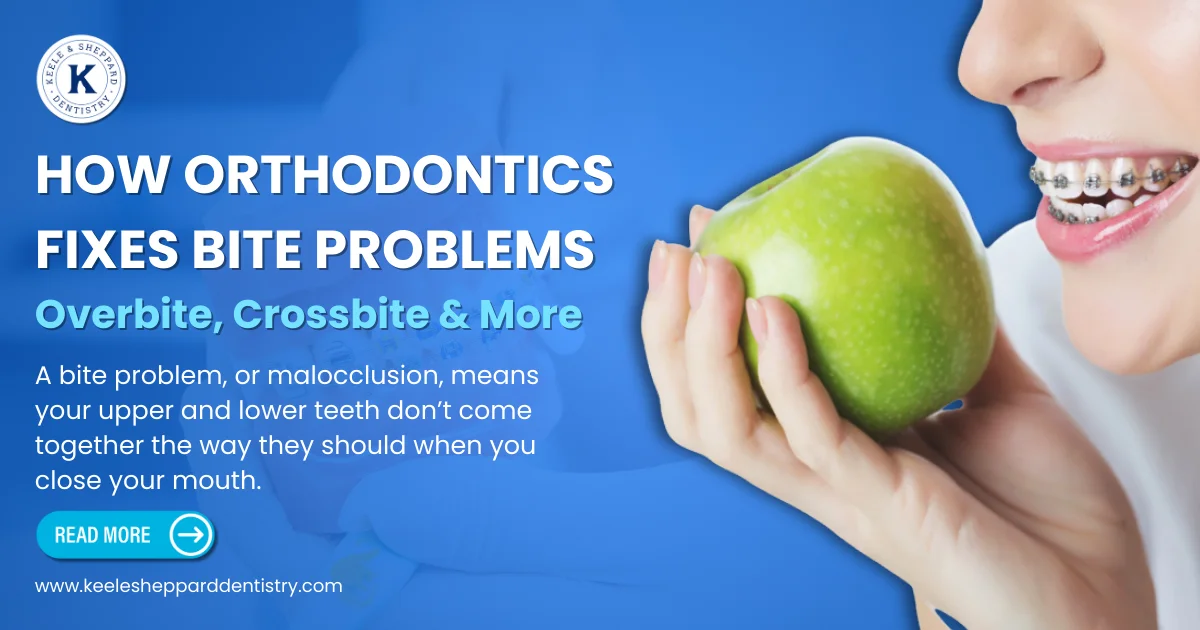
When you think of a great smile, you probably imagine straight, white teeth. But here’s the thing: how your upper and lower teeth fit together matters just as much. If they don’t meet correctly, it can cause pain, wear down teeth, and even make simple things like chewing harder.
This issue is called a bite problem, and orthodontics is the most effective way to fix bite problems for good. With today’s advanced technology, treatments are more comfortable, faster, and customized than ever before.
At Keele & Sheppard Dentistry, patients get expert care that improves both their smile and oral health.
What Are Bite Problems?
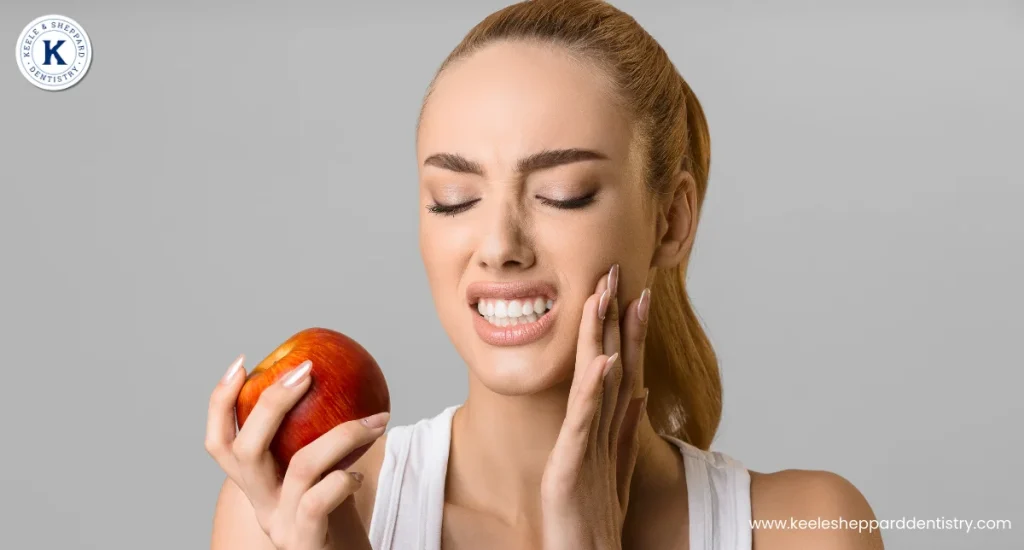
A bite problem, or malocclusion, means your upper and lower teeth don’t come together the way they should when you close your mouth. This can cause uneven pressure on certain teeth, make chewing uncomfortable, and strain your jaw joints.
In simple terms, it’s when your teeth don’t line up properly, and that’s where orthodontics helps. By gently shifting teeth into better alignment, dentists can fix bite problems and prevent future discomfort, tooth wear, or jaw pain.
6 Common Types of Bite Problems You Should Know
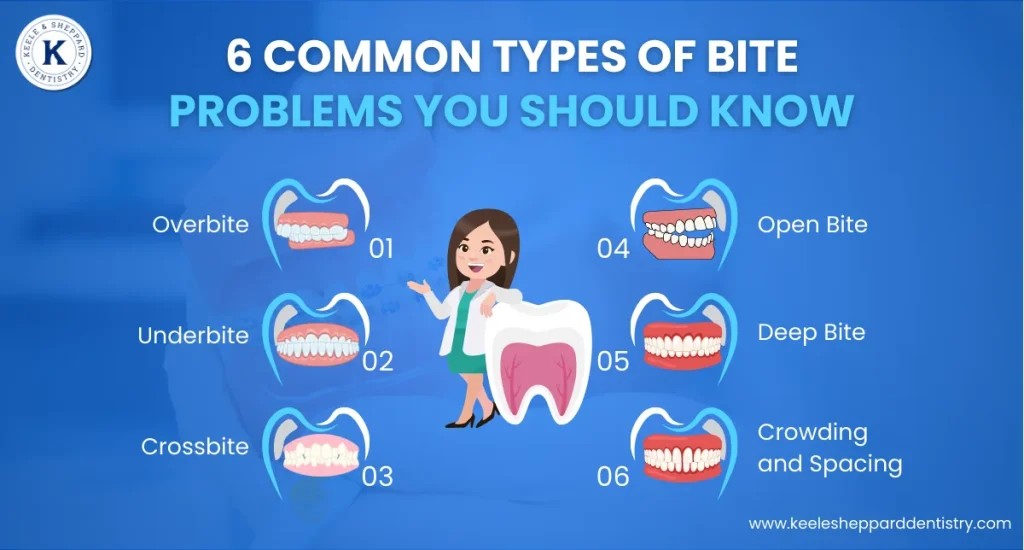
Everyone’s teeth are unique, but most bite problems fall into a few common categories. Let’s look at them one by one.
1. Overbite
An overbite happens when your upper front teeth cover too much of your lower teeth. A small overbite is normal, but if it’s deep, it can damage the gums or wear down lower teeth.
2. Underbite
In an underbite, the lower teeth stick out in front of the upper ones. It can make chewing difficult and affect the shape of your jaw.
3. Crossbite
A crossbite occurs when some upper teeth bite inside the lower ones instead of outside. This can cause uneven wear and even change your facial balance if left untreated.
4. Open Bite
When the upper and lower front teeth don’t touch at all, it’s called an open bite. This can make it hard to bite into food and may affect speech. Thumb sucking or tongue pushing often cause it.
5. Deep Bite
A deep bite is a more severe overbite where the top teeth completely cover the bottom teeth. Over time, it can harm the enamel and cause gum irritation.
6. Crowding and Spacing
Crowded teeth overlap and make cleaning harder, while spacing means gaps between teeth. Both affect your bite and increase the risk of decay.
Early diagnosis is key. A professional orthodontist can correct teeth misalignment before it causes more complex jaw or gum problems.
What Causes Bite Problems?
Most bite problems start during childhood, but can also appear later in life. Sometimes it’s genetic; if your parents had an overbite or crooked teeth, you might too. But habits play a role as well.
Prolonged thumb sucking, mouth breathing, or using a pacifier for too long can change how the jaw grows. Losing baby teeth too early or having missing adult teeth can also shift your bite.
In adults, issues like tooth loss, worn fillings, or trauma can affect how teeth meet. Understanding these causes helps plan the right approach for Orthodontic bite correction.
The earlier treatment begins, the easier it is to guide jaw growth and tooth movement. That’s why regular dental visits, especially during childhood and teenage years, are so important.
How Orthodontics Fixes Bite Problems: Step by Step
Orthodontic treatment has come a long way. It’s not just about braces anymore — it’s about creating harmony between your teeth, jaw, and smile. Here’s how it works:
- Assessment and Planning
The orthodontist takes X-rays, scans, and photographs to study your teeth and bite. This helps create a custom plan to fix bite problems precisely. - Choosing the Right Treatment
Depending on your needs, the doctor might suggest braces, clear aligners, or other dental appliances. Each option is designed to move teeth gradually and safely. - Active Treatment Phase
During this stage, gentle pressure helps shift teeth into the correct position. Regular visits allow your dentist to make small adjustments and track your progress. - Retention Phase
After your teeth are aligned, you’ll wear retainers to hold them in place. This keeps your bite stable and prevents it from shifting back.
Here’s the key: consistency. Showing up for appointments, wearing aligners as instructed, and maintaining good hygiene all help the process go smoothly. Over time, your bite improves, your teeth fit better, and your smile looks more natural.
5 Best Orthodontic Treatments for Bite Correction

There’s no single solution that works for everyone. The best treatment depends on your bite type, age, and comfort level. Here are some common options:
1. Traditional Metal Braces
These are still one of the most reliable ways to fix bite problems. They use small brackets and wires to move teeth gradually and are great for more complex cases.
2. Ceramic Braces
Ceramic braces work just like metal ones but use clear or tooth-colored brackets. They blend in better, making them popular among adults.
3. Invisalign and Clear Aligners
Clear aligners are nearly invisible and can be removed for eating or brushing. They’re ideal for people who want a more discreet way to correct teeth misalignment without metal brackets.
4. Lingual Braces
Placed behind your teeth, lingual braces stay completely hidden. They’re effective but require an experienced orthodontist for best results.
5. Retainers
After your bite is corrected, retainers help keep everything in place. Skipping them can cause your teeth to slowly move back to their old positions.
Modern Orthodontic bite correction techniques are faster and more comfortable than ever. At Keele & Sheppard Dentistry, your Orthodontist in North York will help you find the best approach for your smile and lifestyle.
The Impact of Untreated Bite Problems
Leaving bite issues untreated doesn’t just affect how your smile looks; it affects how your mouth works. Uneven pressure on teeth can cause enamel wear, gum problems, and even jaw pain.
Over time, people with uncorrected bites may also face headaches, difficulty chewing, or changes in speech. You might even notice muscle tension in the face, neck, or shoulders.
The good news is that orthodontic treatment can prevent all of this. When you fix bite problems, you’re not just improving your smile; you’re improving your comfort, confidence, and long-term oral health.
Life After Bite Correction: What to Expect
Once your treatment is complete, the maintenance phase begins. You’ll likely wear a retainer to help your teeth settle into their new positions. This phase is simple but important.
You’ll also notice daily improvements: easier brushing, less jaw tension, smoother chewing, and a more natural smile. Keeping up with regular dental visits ensures your bite stays stable for years to come.
To protect your results, follow your dentist’s advice and never skip your retainers. A few minutes of care each day helps your bite stay strong and balanced for life. With successful Orthodontic bite correction, most patients feel more confident, comfortable, and ready to smile freely.
Why Choose Keele & Sheppard Dentistry for Orthodontic Care
Finding the right clinic matters. At Keele & Sheppard Dentistry, you’re treated by an experienced Orthodontist in North York who understands both the science and art of creating a healthy bite.
The team uses advanced 3D imaging, digital treatment planning, and gentle techniques to fix bite problems effectively. Whether you need braces or clear aligners, every plan is tailored to your comfort, goals, and budget.
Patients trust the clinic for its friendly atmosphere, honest guidance, and results that last. Every detail, from check-ups to retainers, is handled with care and precision.
Ready to Fix Your Bite and Smile Confidently Again?
A healthy, balanced bite isn’t just about how your teeth look; it’s about comfort, confidence, and lifelong oral health. Let our experienced team help you start the right way.
Here’s how Keele & Sheppard Dentistry makes it easy to begin:
- Personalized Treatment Plans: Every smile is unique, and so is your orthodontic care.
- Advanced Technology: 3D scans and digital planning for precise, comfortable results.
- Flexible Options: Choose from braces, clear aligners, or other customized treatments.
- Trusted Expertise: Your local Orthodontist in North York guiding you every step of the way.
Book your consultation today and take the first step toward a smile that feels as good as it looks.
FAQs About Fix Bite Problems
1. How do I know if I have a bite problem?
If your teeth don’t come together evenly when you close your mouth, or you feel discomfort while chewing, you might have a bite problem. Other signs include jaw pain, worn teeth, and difficulty biting into food. A dental exam and bite analysis can confirm it.
2. Can adults get orthodontic treatment to fix bite problems?
Yes. Adults of all ages can benefit from orthodontic care. Clear aligners, ceramic braces, and other modern options make treatment more comfortable and less noticeable. It’s never too late to improve your bite and oral health.
3. How long does it take to correct bite problems?
The time depends on the severity of the misalignment and the type of treatment. On average, orthodontic care can take anywhere from 6 months to 2 years. Consistent follow-ups and wearing retainers as directed help achieve faster results.
4. Will fixing my bite change how my face looks?
Yes, in a positive way. Correcting bite issues helps align your jaw properly, which can improve facial balance and give your profile a more natural, symmetrical look. Patients often notice subtle yet confident changes in their appearance.
5. Do I need retainers after bite correction?
Absolutely. Retainers are essential after any orthodontic treatment to keep your teeth in their new positions. Wearing them as advised by your orthodontist ensures your results stay stable and long-lasting.