Most people don’t lose their teeth because of one big mistake. It usually happens because of small habits repeated every day.
That’s why healthy teeth habits matter far more than expensive treatments later. The way you brush, what you eat, and how you care for your mouth before bed, all of it adds up over time.
The good news is this. You don’t need fancy tools or complicated routines. A simple, consistent daily dental care routine is enough to protect your smile for years.
Let’s break it down into seven habits that dentists see making the biggest difference.
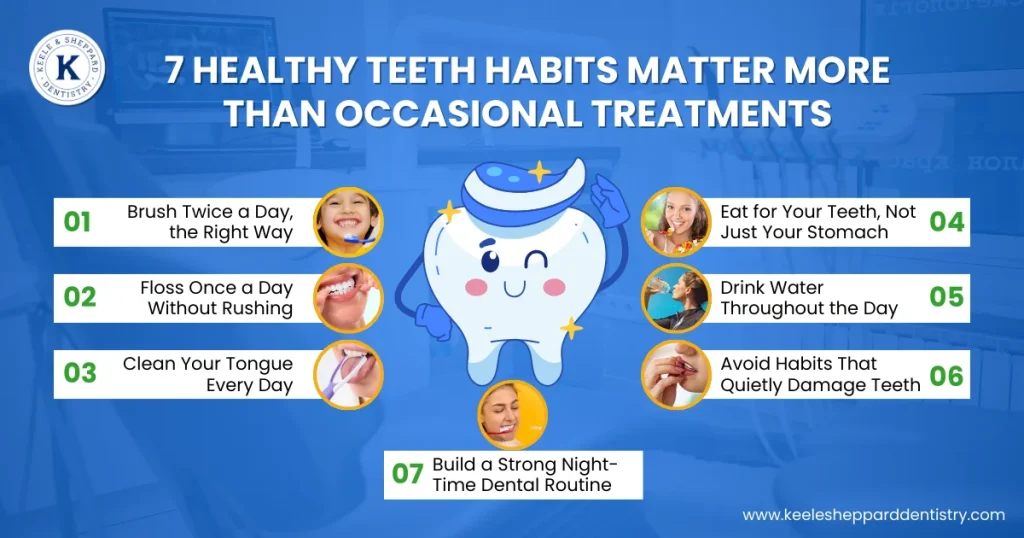
7 Healthy Teeth Habits Matter More Than Occasional Treatments
Seeing a dentist once or twice a year is important, but it cannot undo daily damage. Cavities, gum disease, and enamel wear usually start quietly. By the time pain shows up, the problem has already grown.
Strong, healthy teeth habits work like prevention insurance. They stop issues before they turn into fillings, root canals, or extractions.
Think of oral care the same way you think of exercise or eating well. Small actions done daily beat rare, intense efforts every time.
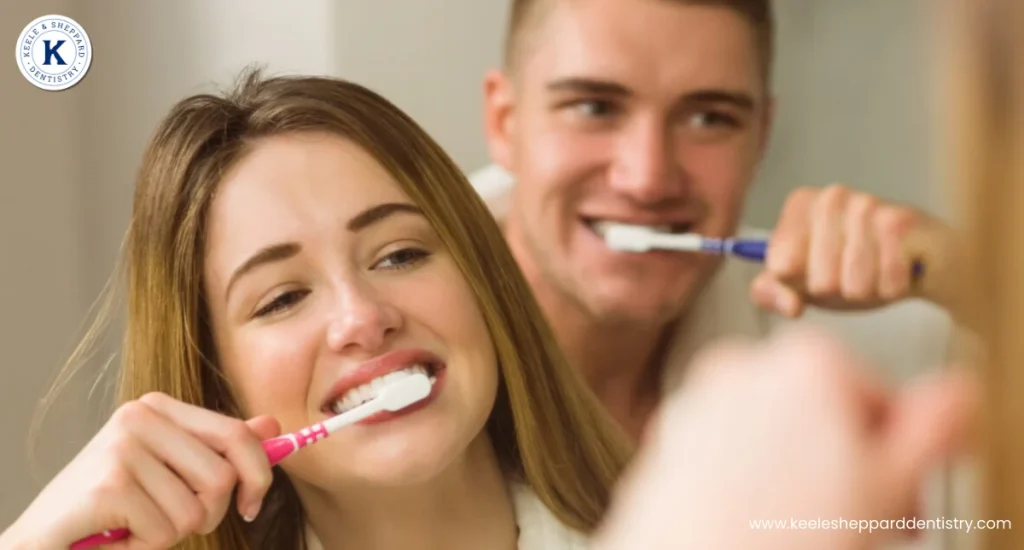
Habit 1: Brush Twice a Day, the Right Way

Brushing twice a day sounds obvious, yet technique matters just as much as frequency.
Use a soft-bristled toothbrush and brush gently for two full minutes. Focus on small circular motions rather than hard back-and-forth scrubbing. Aggressive brushing can damage enamel and irritate gums.
Morning brushing removes overnight bacteria. Night brushing is even more important because it clears away food particles and plaque before bacteria settle in while you sleep.
This simple step is the foundation of all healthy teeth habits.
Habit 2: Floss Once a Day Without Rushing
Brushing alone cleans only about 60 percent of your teeth. The rest is handled by flossing.
Floss once a day, preferably at night. Slide the floss gently between teeth and curve it around each tooth instead of snapping it down. This removes plaque and food stuck where toothbrushes cannot reach.
Skipping flossing is one of the biggest gaps in a daily dental care routine. Over time, it leads to gum inflammation and cavities between teeth, areas that are harder to treat.
If traditional floss feels difficult, floss picks or water flossers can help. What matters is consistency.
Habit 3: Clean Your Tongue Every Day
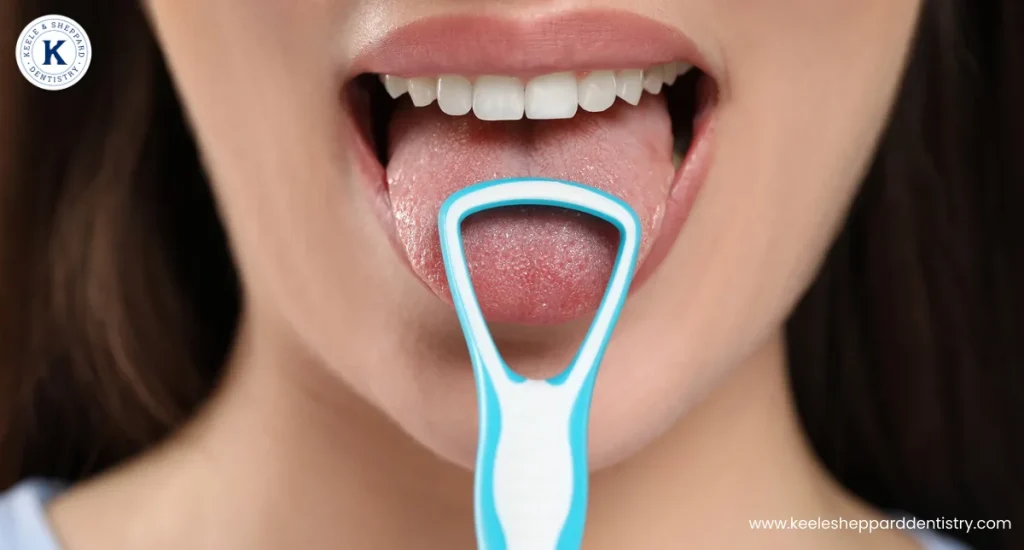
Your tongue holds bacteria that cause bad breath and contribute to plaque buildup.
Use a tongue scraper or the back of your toothbrush to gently clean your tongue once a day. Start from the back and move forward. Rinse after.
This habit often gets overlooked, but dentists see clear benefits when patients include it. It supports fresher breath and strengthens overall healthy teeth habits without adding much effort.
Habit 4: Eat for Your Teeth, Not Just Your Stomach
What you eat affects your teeth just as much as how you clean them.
Sugary snacks, sticky foods, and frequent sipping of sweet drinks feed bacteria that produce acids. These acids weaken enamel and lead to cavities.
Try to balance your diet with foods that protect teeth, such as:
- Crunchy fruits and vegetables
- Dairy products like cheese and yogurt
- Nuts and seeds
- Plenty of water
You do not need to avoid sugar completely. Just reduce how often you consume it and avoid grazing all day. This simple shift supports long-term healthy teeth habits without feeling restrictive.
Habit 5: Drink Water Throughout the Day

Water does more than quench thirst. It rinses away food particles, neutralizes acids, and helps maintain saliva flow.
Saliva is your mouth’s natural defense system. It protects enamel and fights bacteria. When you are dehydrated, saliva production drops, increasing the risk of decay.
Drinking water regularly is one of the easiest oral health tips that many people underestimate. Make it your go-to drink between meals.
Habit 6: Avoid Habits That Quietly Damage Teeth
Some habits cause harm slowly, which is why they often go unnoticed.
Common ones include:
- Using teeth to open packaging
- Nail biting
- Ice chewing
- Grinding or clenching teeth
- Smoking or vaping
Over time, these behaviors wear down enamel, crack teeth, and irritate gums. If you grind your teeth at night, a dentist can recommend a night guard to protect them.
Protecting your smile also counts as part of healthy teeth habits.
Habit 7: Build a Strong Night-Time Dental Routine
Night-time care deserves special attention because bacteria are more active when saliva flow decreases during sleep.
Before bed:
- Brush thoroughly
- Floss carefully
- Clean your tongue
- Avoid late-night snacking
Going to bed with a clean mouth dramatically lowers the risk of cavities and gum disease. This habit alone can change your long-term oral health.
A consistent night routine is often the difference between average care and truly healthy teeth habits.
Common Mistakes People Think Are Healthy but Aren’t
Many people mean well, but unknowingly hurt their teeth.
Some common misconceptions include:
- Brushing harder cleans better
- Skipping floss if gums bleed
- Rinsing with water immediately after brushing
- Whitening too often without guidance
Bleeding gums usually mean inflammation, not that flossing should stop. And rinsing right after brushing washes away protective fluoride.
Understanding these small details helps your daily dental care routine actually work.
When Daily Habits Are Not Enough
Even with strong, healthy teeth habits, some problems still need professional care.
You should see a dentist if you notice:
- Persistent bad breath
- Bleeding or swollen gums
- Tooth sensitivity or pain
- Jaw discomfort
- Changes in bite or alignment
Routine visits help catch issues early, when they are simpler and less costly to treat.
Final Thoughts
A healthy smile is not built in a dental chair. It is built at home, one day at a time.
By sticking to these healthy teeth habits, you protect your teeth, gums, and overall health without complicated routines or stress. Simple actions done consistently always win.
If you want guidance tailored to your smile or need a preventive checkup, booking a visit with a Dentist in North York at Keele & Sheppard Dentistry can help you stay on track for years to come.
Your future smile will thank you for what you do today.
Why Seeing a Dentist in North York Still Matters

Daily care and professional care work best together. A dentist can spot early signs of trouble you may not feel yet.
If you are looking for a trusted Dentist in North York, regular checkups help ensure your daily efforts are paying off. Professional cleanings remove hardened plaque that brushing and flossing cannot.
At Keele & Sheppard Dentistry, preventive care is focused on education, comfort, and long-term oral health, not rushed treatments.
FAQs About Daily Oral Care
Q1. How long does it take to build healthy teeth habits?
Most people notice improvements in gum health and breath within a few weeks. Long-term protection builds over months of consistency.
Q2. Is brushing twice a day really enough?
Brushing twice daily works best when paired with flossing and proper technique. It is the combination that matters.
Q3. Can diet really affect oral health that much?
Yes. Frequent sugar exposure and acidic foods directly increase cavity risk. Diet plays a major role in oral health tips shared by dentists.
Q4. Should kids and adults follow the same routine?
The basics are the same, but product choices and supervision differ. A dentist can guide age-specific care.
Q5. Do electric toothbrushes work better?
They can be helpful, especially for people with limited mobility, but proper use matters more than the tool itself.