Dental Bridges in North York
Missing a tooth doesn’t just affect your smile; it changes how you chew, speak, and feel about yourself. A gap can cause surrounding teeth to shift out of place, leading to bite problems or jaw discomfort. That’s where dental bridges in North York come in.
At Keele & Sheppard Dentistry, we help patients restore their smiles and confidence through durable, natural-looking bridges designed to fit perfectly. Whether you’ve lost one tooth or several, our expert team provides personalized care that brings balance, comfort, and beauty back to your smile.
- Clear Pricing
- Direct Billing
- Evening Hours
What is a Dental Bridge?
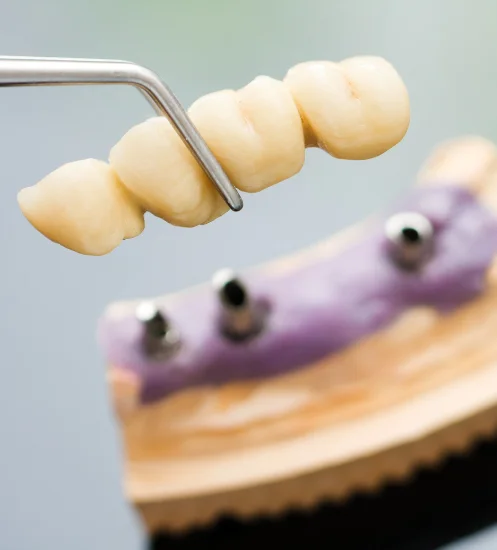
A dental bridge is a fixed dental restoration that replaces one or more missing teeth by anchoring an artificial tooth (called a pontic) to the neighbouring natural teeth or dental implants. Unlike dentures, bridges are permanent; they don’t shift or need removal for cleaning.
Each bridge is custom-made to match your bite and tooth colour, ensuring a seamless, natural appearance. At our clinic, we offer several types of dental bridges, including:
Supported by crowns on either side of the missing tooth.
Attached to only one adjacent tooth when space is limited.
Ideal for front teeth, using minimal preparation.
Anchored securely to dental implants for long-term stability.
Benefits of Dental Bridge Treatment
Replacing missing teeth is about more than appearance; it’s about restoring balance and function. Here’s why our patients choose dental bridge treatment in North York:
- Restores chewing ability – Enjoy your favorite foods again without discomfort.
- Improves speech clarity – Missing teeth can affect pronunciation and confidence.
- Prevents shifting – Keeps surrounding teeth from moving into empty spaces.
- Maintains facial shape – Prevents sunken cheeks and premature aging.
- Boosts confidence – A complete smile makes a big difference in self-esteem.
Dental Bridges vs. Dental Implants
Patients often ask: Is a dental bridge better than an implant? The answer depends on your individual situation.
Dental bridges are ideal if the adjacent teeth need crowns anyway or if bone density isn’t sufficient for implants. They offer a quicker, less invasive solution that can restore function in just a few visits.
Dental implants, on the other hand, replace the entire tooth root and offer unmatched longevity. However, they require surgery, longer healing, and higher initial costs.
At Keele & Sheppard Dentistry, we don’t take a one-size-fits-all approach. Our team explains the pros and cons of dental bridges vs implants, helping you choose the most practical and cost-effective option for your oral health.
What to Expect During Dental Bridge Treatment
We assess your oral health, take X-rays, and discuss your replacement options.
The supporting teeth are gently reshaped to hold the crowns that will anchor your bridge.
We create precise molds to ensure a comfortable and accurate fit.
A temporary restoration protects your teeth while your permanent bridge is crafted in a dental lab.
Your bridge is fitted, adjusted for bite, and permanently cemented in place.
Caring for Your Dental Bridge
- Brush twice daily using fluoride toothpaste.
- Floss underneath the bridge with a floss threader or interdental brush.
- Schedule regular cleanings and exams every six months.
- Avoid chewing hard candies or ice to extend your bridge’s life.
With proper care, your dental bridge in North York can last 10–15 years or longer.
Why Choose Keele & Sheppard Dentistry
- Over a decade of restorative dentistry expertise
- Advanced materials and lab partnerships for natural aesthetics
- Flexible payment and insurance options
- Convenient location in North York with free parking
- Compassionate, multilingual team
Posted onTrustindex verifies that the original source of the review is Google. Carla was fantastic and amazing as usual! Front desk was very friendly!Posted onTrustindex verifies that the original source of the review is Google. Always a great experience. Everyone is kind, courteous and professional.
Owner's reply
Thank your for the rating!Posted onTrustindex verifies that the original source of the review is Google. I visited today Dr Neerav Arora attended Excellent service Front staff are very beautifulPosted onTrustindex verifies that the original source of the review is Google. The staff from reception to the hygienist and dentist are all extremely friendly and professional. They go out of their way to make sure your appointment is as smooth as possible.
Owner's reply
Thank you Aman for the wonderful review. It is always a pleasure to have you at our office.Posted onTrustindex verifies that the original source of the review is Google. Keele St. 근처에 사는 한국 유학생분들! 여기 정말 추천하는 치과입니다! 영어를 못 해도 영어를 못 한다고 솔직히 말하니까 수준에 맞춰서 진료 받을 수 있었고, 의사선생님께서 친절하게 알려주셔서 부담없이 치료받을 수 있었어요!! 또 가격도 합리적이라 보험이 없었는 데도 걱정을 덜 수 있었습니다🥹 치아에 문제 생기면 너무 걱정 말고 여기 오시면 될 것 같아요👍👍 I recommend this dentist to Korean international students living near Keele St. If you honestly say you can't speak English well, then you're able to get treatment according to your English level! And the doctor kindly let me know what happened and what I need to do after. So I could get treatment without any burden!! Also, the price was reasonable, so I was able to relieve my worries even though I didn't have insurance🥹 If you have any problems with your teeth, don't worry too much and come here👍👍Posted onTrustindex verifies that the original source of the review is Google. Claudia has light hands and giving you specific details on how to handle your teeth. TYPosted onTrustindex verifies that the original source of the review is Google. I love the service. Dr. Arora is very gentle
FAQs About Dental Bridges in North York
Q1: What are the different types of dental bridges?
Q2: Is a dental bridge better than an implant?
Q3: How long do dental bridges last?
With proper care, dental bridges in North York typically last between 10 and 15 years. Regular hygiene visits and good oral care can extend their lifespan.
Q4: Are dental bridges covered by insurance or CDCP?
Yes, most insurance plans and the Canadian Dental Care Plan (CDCP) cover a portion of dental bridge treatment. Our staff can help verify your coverage and submit claims directly.
Q5: Can dental bridges be used for front teeth?
Q6: What materials are used for dental bridges?
Q7: How do I care for my dental bridge?
Brush twice daily, floss beneath the bridge using a floss threader, and maintain regular cleanings. Avoid biting on hard foods to prevent cracks or dislodging.